Building a Search Engine From Scratch: Introducing My Project

I've always been curious about what happens behind the scenes when we search for something online.
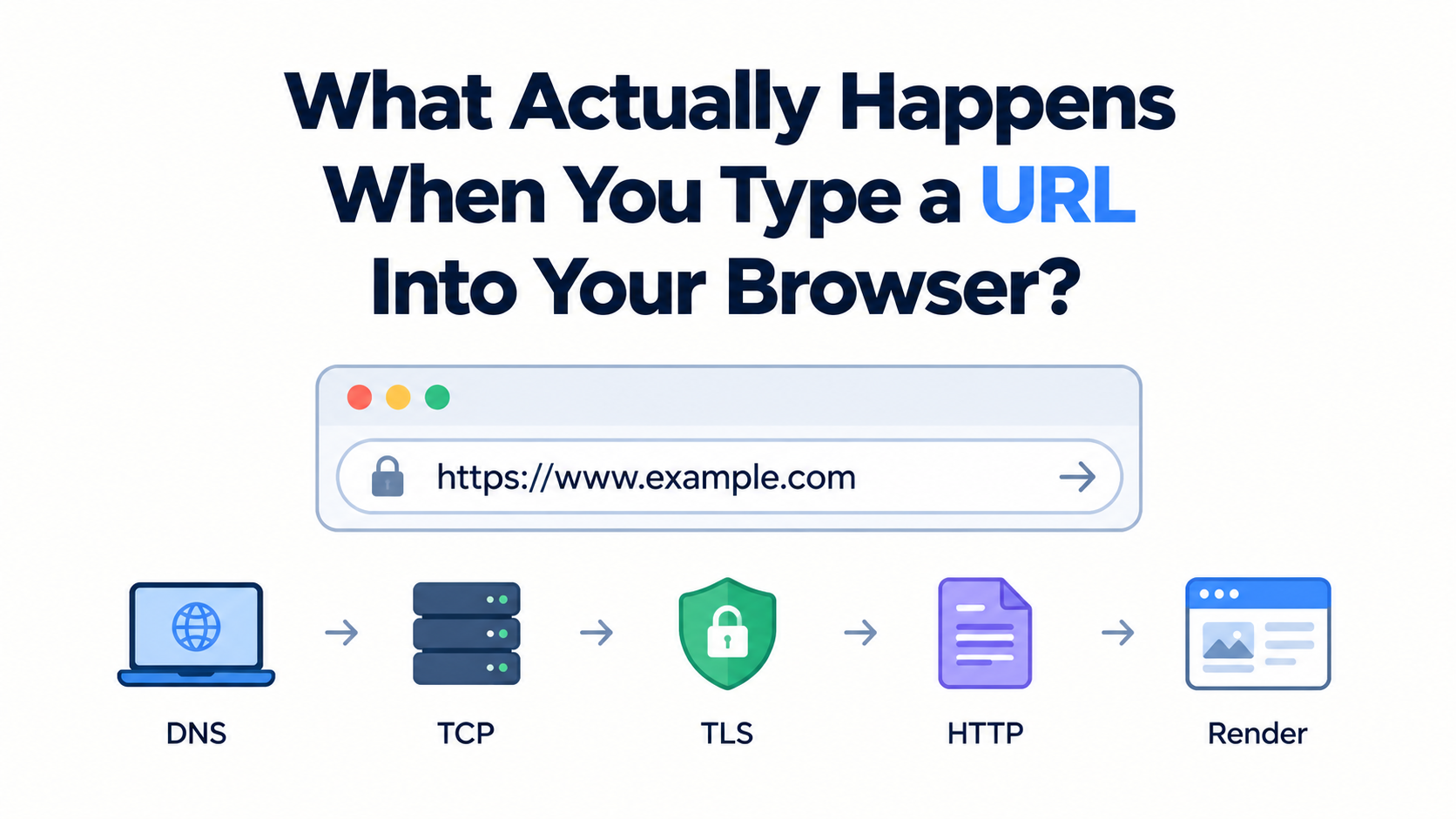
We type a few words into a search bar, press Enter, and within milliseconds, we're presented with a list of results. But what actually happens between entering a query and receiving those results? How does a search engine find relevant documents? How does it decide which results should appear first?
I wanted to understand these processes beyond just learning the theory. So, I decided to build my own search engine from scratch.
This is the beginning of a series where I'll document the development of my search engine, the technologies I'm using, the challenges I encounter, and the concepts I learn along the way.
What Am I Building?
My goal is to develop a search engine that can process documents, organize information, and retrieve relevant results based on a user's search query.
Rather than relying on an existing search engine API to handle the main functionality, I want to implement the underlying search mechanisms myself.
Some of the major components I plan to work on include:
- Document Processing: Preparing and processing documents so they can be searched efficiently.
- Inverted Indexing: Creating a data structure that maps terms to the documents in which they appear.
- Information Retrieval: Finding documents that match a user's search query.
- Search Ranking: Determining how relevant each document is to a query.
- Query Processing: Taking a user's input and transforming it into something the search engine can process.
These components will work together to turn a basic search query into an organized list of relevant results.
Technologies I'm Using
I'm building this project with technologies that allow me to develop and connect the different parts of the search engine.
Some of the technologies currently involved include:
- Python: The primary programming language for implementing the search engine's backend logic.
- FastAPI: A Python framework I'm using to build the backend API and handle requests.
- JavaScript: Used for frontend functionality and communication with the backend.
- HTML and CSS: Used to structure and style the user interface.
- Git and GitHub: Used for version control and documenting the project's development.
I'm also keeping the project locally runnable rather than depending on a deployed application. This allows me to focus on the underlying implementation and provide instructions for others who want to run it on their own machines.
How Does a Search Engine Actually Work?
Before getting deeper into the implementation, it's useful to understand the general workflow I'm trying to build.
A simplified search engine follows a process like this:
- Collect documents: The system obtains the information that users will eventually be able to search.
- Process documents: The content is cleaned and prepared for indexing.
- Build an index: The system organizes terms so it doesn't have to scan every document from scratch for every query.
- Process a query: A user enters a search term, which the system analyzes.
- Retrieve and rank results: The search engine finds matching documents and determines which ones are most relevant.
- Display results: The user receives an ordered list of search results.
One particularly interesting part of this process is the inverted index.
Imagine having thousands of documents. Without an index, the search engine might need to examine every document whenever someone searches for a word. An inverted index changes this approach by storing a mapping between words and the documents containing them.
For example:
| Word | Documents containing the word |
|---|---|
| Python | Document 1, Document 3 |
| Security | Document 2, Document 3 |
| Programming | Document 1, Document 2 |
Instead of searching through every document, the engine can use this mapping to locate potentially relevant documents much more efficiently.
This is one of the core concepts I want to implement and understand in this project.
What Makes This Project Interesting to Me?
I could have built another basic web application, but I wanted to work on something that would challenge me to understand the computer science concepts operating behind the scenes.
Building a search engine involves several interesting areas of computer science, including:
- Data structures and algorithms
- Information retrieval
- Text processing
- Backend development
- API design
- Software testing
- Performance optimization
I'm particularly interested in understanding how different algorithms affect search quality and performance.
For example, I plan to explore TF-IDF and BM25, two approaches used in information retrieval to evaluate how relevant a document is to a search query.
I also want to understand the trade-offs involved in designing a system that can retrieve useful results without unnecessarily wasting computational resources.
Where Does the Project Stand Right Now?
I'm developing the project incrementally rather than trying to implement everything at once.
I've started by setting up the local development environment, organizing the project structure, and building the initial backend functionality.
At this stage, the project is still under development. The more advanced indexing, ranking, and retrieval features are part of the implementation roadmap, not features I'm claiming to have completed.
I'll be sharing actual code, screenshots, test results, and explanations as I implement each component.
You can also follow the development through my GitHub repository:
GitHub: https://github.com/ved-p-coder/Search-Engine
What's Next?
In the next article, I'll take a closer look at the backend architecture and how I'm using FastAPI to build the foundation of the search engine.
I'll explain the project structure, how the backend handles requests, and how the different components will communicate with one another.
This is just the beginning. I'm looking forward to documenting the process, learning more about information retrieval, and seeing how far I can take this project.
Thanks for following along!
This is the first article of my Search Engine development series. More updates coming as the project progresses.
Comments
Join the discussionNo comments yet. Be the first to comment.
Building a Search Engine From Scratch
Follow my journey of building a search engine from scratch using Python, FastAPI, and other technologies. I'll document the development process, explore concepts like inverted indexing and information retrieval, implement search-ranking algorithms, and share the challenges and lessons learned along the way.